A Day in the Life of a Vision Rehabilitation Specialist
By Mat Napier
Have you ever wondered what a typical day looks like for a Vision Rehabilitation Specialist?
Vision Rehabilitation Specialists (VRS) play a vital role in helping people with vision impairments maintain independence, confidence, and wellbeing. From mobility training and daily living skills to emotional support and advocacy, no two days are ever the same.
In this blog, Mat Napier, a Vision Rehabilitation Specialist working alongside Vision Support and Conwy Social Services, shares what a typical day in his role looks like.
What is a Vision Rehabilitation Specialist?
I am a Vision Rehabilitation Specialist (VRS) working for Vision Support within Social Services in Conwy. It’s a job not many people have heard of, but it’s one that I am very proud to tell people about.
A VRS is a professionally trained case worker who works exclusively with vision impaired people, with the goal of empowering people to achieve their independence goals.
We do this by carrying out face-to-face assessments and creating individualised care plans that may involve:
- Teaching and training
- Referrals to other professionals or organisations
- Emotional support and encouragement
- Community integration
- Support to access work and education
- Advocacy
- Community outreach
How We Support People
Some of the common things we do when carrying out teaching and training include:
Daily Living Skills
Helping people re-learn how to complete activities such as:
- Cooking
- Cleaning
- Personal grooming
- Organisation
Orientation and Mobility Training
Teaching techniques for safe and efficient travel and providing training in the use of mobility aids such as a long cane.
Accessible Technology Training
Providing support to help people get the most out of their technology devices.
You can learn more about Vision Support’s Digital Skills services here:
Services We Offer
Braille Training
Providing introductions to Braille, learning opportunities, and ongoing support.
Emotional Support and Advocacy
Sometimes people simply need someone in their corner. Being there for people who are having difficulty coming to terms with their vision impairment is a big part of what we do.
A Typical Day
No week is exactly the same, which is one of the big positives of being a VRS. Hopefully this gives you an idea of what a normal day might look like.
7:15am – Morning Routine and Calm Before the Storm 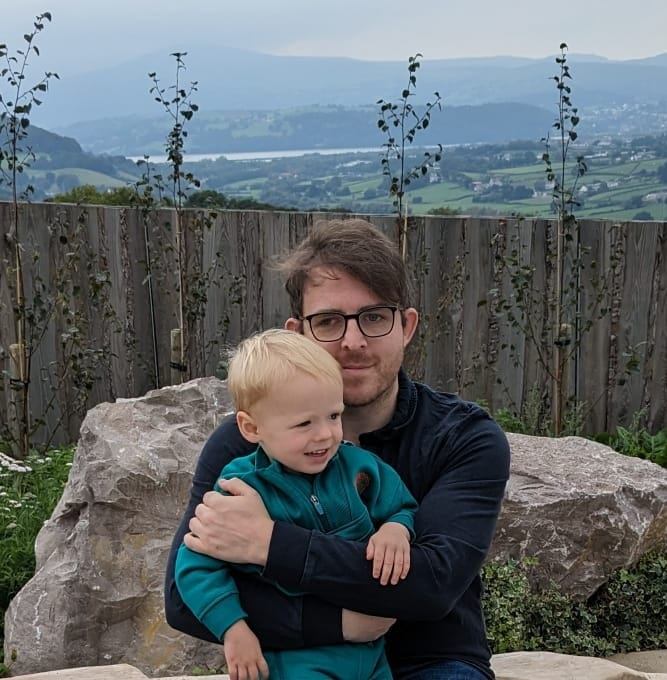
My toddler wakes up at 7:30 every day, so I enjoy my 15 minutes listening to an audiobook and waiting for him to signal the beginning of the day by shouting:
“DADDY, DAAADDY, DAAAAAAADDDDY!”
7:30am – Breakfast and Getting Ready
Most of the next 30 minutes is spent persuading him to eat his breakfast and stay at the table.
This morning, I managed it by promising I would be his patient and he could play doctor with his medical kit if he ate up quickly.
8:15am – Time to Start Work
My partner and son have left for work and nursery, and it’s my turn to get ready.
As I often work from home, I use this time to shower, get dressed, and prepare for the day before logging on between 8:30am and 9:00am.
9:00am – Planning the Day
I check my calendar, contact the taxi company to arrange my journeys, and call the people I am visiting to confirm appointments and provide an estimated arrival time.
10:00am – Preparing for Visits
My first visit today is a mobility assessment with Mr B, where I’ll be demonstrating a long cane.
I make sure I have:
- Different sized canes
- A spare roller ball tip
- Assessment materials
I also review case notes to refresh my memory of any important information.
Supporting Mr B
10:30am
My taxi arrives on time, and I meet Mr B.
Mr B has lost confidence travelling outdoors after experiencing a few stumbles over kerbs and uneven surfaces.
We spend time discussing his difficulties and carrying out an orientation and mobility assessment.
At a nearby park, we use the tarmac paths to:
- Demonstrate long cane techniques
- Identify kerbs
- Recognise changes in terrain
- Detect obstacles safely
By the end of the session, Mr B feels the cane could significantly improve his confidence.
We agree to arrange a follow-up session focusing on steps and learning a local route.
Meeting Mrs V
12:00pm
After updating Vision Support that my first visit has finished safely, I travel to meet Mrs V.
As this is our first meeting, I show my Social Services identification badge before being invited in.
Mrs V kindly offers me a cup of tea. I often accept because preparing hot drinks is a common area where people may need support, and it allows me to observe how someone manages everyday tasks.
Over the next 90 minutes, we discuss:
- Her experiences
- Her goals
- Areas where she would like support
Together we agree a plan that includes:
- Information about local social groups
- Referrals to community services
- A referral to the Welsh Low Vision Service
- Support with an Attendance Allowance application
- Daily living skills training to make kitchen tasks easier
You can find out more about the Welsh Low Vision Service here:
https://lowvisionservice.wales/
You can also learn more about Vision Support’s social groups and community activities here:
Upcoming Events | Vision Support
Back to the Office
1:30pm
I return home and take 30 minutes for lunch.
Usually this means a sandwich and some time away from the screen.
2:15pm
The afternoon is typically dedicated to administration, including:
- Responding to emails
- Speaking with other professionals
- Updating case files
- Making referrals
- Following up on agreed actions
5:00pm
I shut down my computer and spend some time doing jobs around the house before my partner and son return home.
The evening largely consists of family time, which today means being diagnosed by my toddler with a bumped head and scraped knee, followed by a pretend injection and a bandage around my hand.
7:00pm
Bedtime routine and a chance to wind down before doing it all again tomorrow.
Every Day is Different
One of the things I love most about being a Vision Rehabilitation Specialist is that no two days are ever the same.
Every assessment, every conversation, and every piece of support is tailored to the individual. Seeing people build confidence, develop new skills, and achieve greater independence is one of the most rewarding parts of the role.
If you’d like to learn more about Vision Support’s services or the support available in your area, please get in touch with our team.
📞 01244 381515
📧 information@visionsupport.org.uk